
 English
 Spanish
Signs of Phone Addiction in Teens
Heavy phone use is nearly universal among teens, which makes it genuinely tricky to spot the real signs of phone addiction in teens and tell the difference between typical teenage behavior and something that’s become compulsive or harmful. The distinction usually isn’t about total hours. Instead, it’s about function: is the phone displacing sleep, activities, and in-person connection, and does your teen struggle to disengage even when they want to?
According to the American Academy of Pediatrics’ Family Media Use Plan guidance, the goal isn’t a strict hour count. Parents should make sure media use doesn’t crowd out sleep, physical activity, and face-to-face time. This is the lens worth applying when you’re trying to recognize genuine warning signs at home.
Common Signs of Phone Addiction in Teens
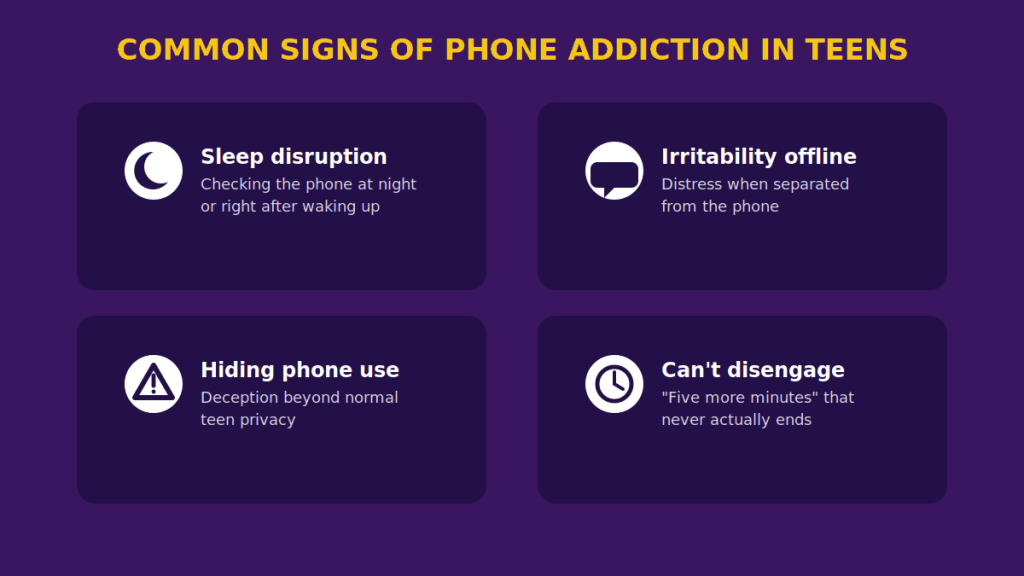
- Difficulty disengaging, even when they say they want to. A teen may repeatedly say “just five more minutes” but struggle to follow through. This pattern differs from simply preferring screen time over other activities.
- Anxiety or irritability when separated from their phone. Distress that seems disproportionate to a temporary separation can indicate that the phone serves an emotional need beyond entertainment.
- Sleep disruption linked to phone use. This can include checking the phone immediately after waking, staying up because of phone use, or waking during the night to check notifications.
- Declining interest in previously enjoyed offline activities. A sudden drop in sports, hobbies, or in-person socializing can be concerning when it coincides with increased phone use.
- Using the phone to regulate difficult emotions. Your teen may reach for the phone whenever they feel bored, stressed, lonely, or sad instead of using other coping strategies.
- Deception about usage. Hiding how much time they spend on the phone, or how they use it, can signal a problem when it goes beyond normal teen privacy.
Normal Teen Phone Use vs. Signs of Phone Addiction
Frequent phone use alone isn’t necessarily a problem. Most teens check their phones many times a day because phones have become a major part of their social lives. A 2024 Pew Research Center survey found that nearly half of U.S. teens say they use the internet “almost constantly.”
What matters more is function and control. Does the phone support your teen’s life, or has phone use become a source of distress and conflict? Parents should also consider what screen time replaces. Our guide to screen time limits by age explains why healthy screen habits involve more than counting hours.
What Doesn’t Help With Phone Addiction
Confiscating the phone as a first response can increase conflict without addressing the underlying behavior. It can also cut a teen off from their primary social connection, especially when phone use helps them manage difficult emotions.
Building Healthier Phone Habits
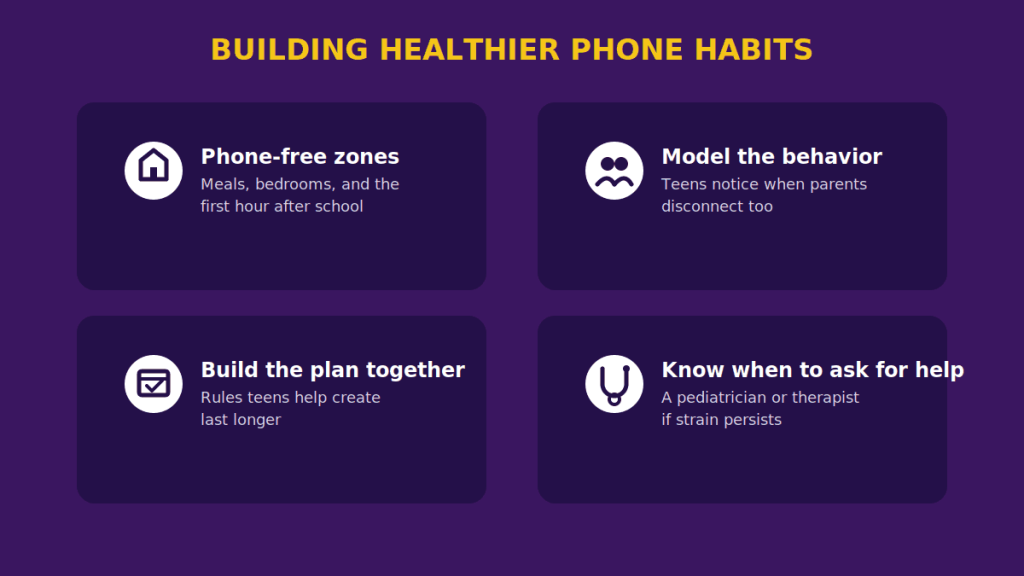
- Build phone-free zones and times as a household norm. Meals, the first hour after school, and the bedroom overnight are useful starting points. Our guide to restricting screen usage with parental controls explains practical ways to set limits on Android and iOS.
- Model the behavior you want to see. Teens notice when parents remain attached to their own phones while asking their children to disconnect.
- Address the underlying need, not just the behavior. If your teen uses the phone to manage boredom, stress, or loneliness, provide alternative ways to handle those feelings.
- Involve your teen in building the plan. Rules that teens help create can be easier to follow than rules imposed without discussion.
- Know when to seek professional support. If phone use significantly disrupts sleep, school, relationships, or emotional wellbeing despite your efforts, consider speaking with a pediatrician or therapist.
You don’t have to rely on strict rules or invasive monitoring. Our guide on how to set healthy phone rules without spying offers practical ideas for creating boundaries while maintaining trust with your teen.
Frequently Asked Questions About Phone Addiction in Teens
How Many Hours of Phone Use Counts as Addiction?
There’s no single hour threshold. Instead, consider whether phone use displaces sleep, activities, relationships, and responsibilities. Also consider whether your teen can disengage without significant distress.
Is Phone Addiction a Real Diagnosis?
“Phone addiction” is not a formal clinical diagnosis in the same way as substance use disorders. However, researchers and clinicians study problematic and compulsive technology use. If you’re concerned about your teen, a pediatrician or therapist can help you assess the situation.
Should I Take My Teen’s Phone Away Entirely?
For most situations, this is better treated as a last resort rather than a first step. Abruptly removing the phone can cut a teen off from their main social connection without addressing the underlying behavior. Gradual limits created together often provide a better starting point.
If you’re still deciding whether your child is ready for a phone, our guide on the right age to give children personal cell phones can help.
Could Monitoring Help With Signs of Phone Addiction?
Monitoring can provide useful context about how your teen uses their phone. However, monitoring alone does not address compulsive habits. Household structure, communication, and professional support may also be necessary.
If you’re considering monitoring, first learn how to approach the conversation with your teen. Our guide on how to talk to your teen about phone monitoring offers practical tips for discussing monitoring without immediately creating conflict.
You can also explore TheWiSpy’s parental control features to understand what monitoring tools can and cannot do.
Bottom Line on Signs of Phone Addiction in Teens
The clearest signal isn’t how many hours a teen spends on their phone. Instead, look at whether they can put it down, whether phone use crowds out sleep and other activities, and whether they rely on it to manage difficult feelings.
Addressing the underlying function matters more than focusing on a specific screen-time number. For a broader foundation, see our guide to 10 ways to ensure your child’s online safety.
This article is for general informational purposes. If you’re concerned that your teen may be experiencing significant distress related to phone or technology use, consider speaking with a pediatrician or mental health professional.

Related Posts

Signs of Online Grooming Parents Often Miss
Online grooming is a process, not a single event. Predators...
Read More
Install TheWiSpy Monitor App Now and Start Exploring Your Kid’s and Employee’s Digital Space
- Protect Your Kids
- Secure Your Business
- Backup Personal Data

 Affiliate Login
 Spanish