
 English
 Spanish
Is Phone Monitoring Legal in Texas? A Parent’s Guide
Posted in Parental Control by admin
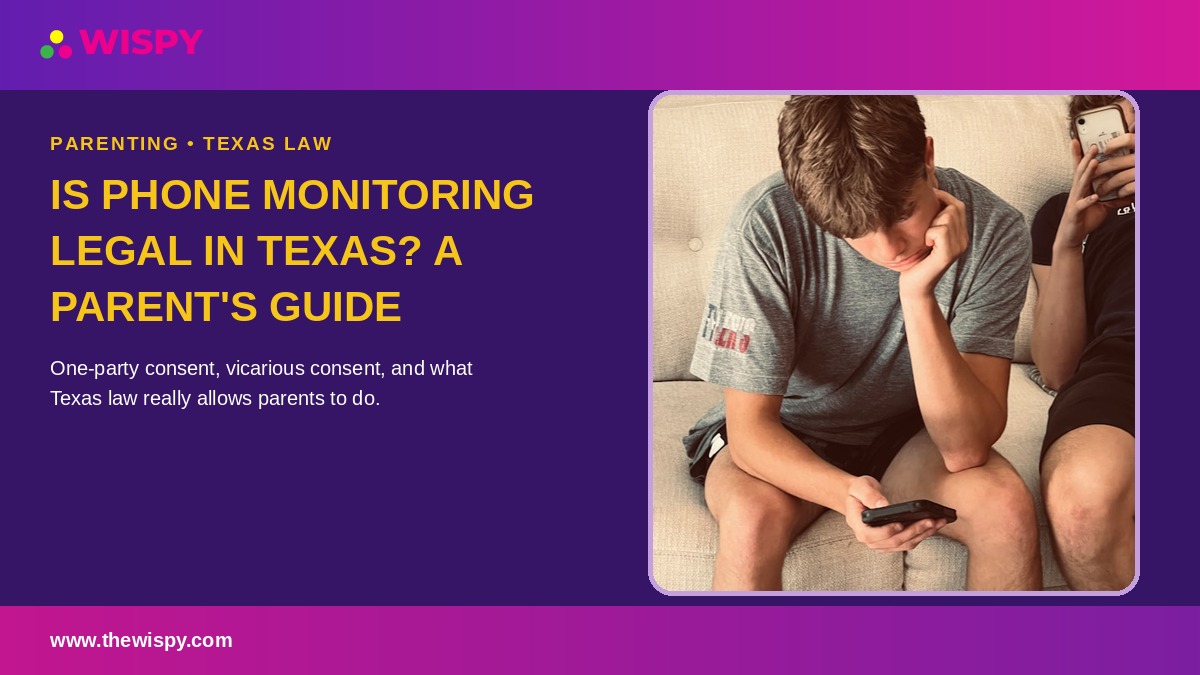
Is phone monitoring legal in Texas? Yes, in most cases. Texas law gives parents wide latitude to check messages, apps, and location on a child’s phone. The rules shift a bit when it comes to recording calls. This guide breaks down what Texas’s consent laws actually mean for parents.
Phone Monitoring Legal in Texas: The General Rule
Texas parents can generally monitor a minor child’s phone activity. This covers messages, app usage, and location. The rule applies when the parent owns the device or pays for the service. It fits the broader parental oversight rights recognized across the US. If you’re just getting started, our guide on how to monitor your child’s phone walks through the setup steps.
Why Texas’s One-Party Consent Law Matters
Texas only requires one-party consent to record a conversation. If the parent is a party to the call, or has consent from a party, recording is generally allowed. Every participant does not need to agree. This is a much more permissive standard than all-party consent states like California or Florida. It directly shapes what’s practical for parents around call recording. You can compare how consent laws vary by state for more context on where Texas stands.
Vicarious Consent: Recording a Child’s Conversations
Texas courts recognize the vicarious consent doctrine. This lets a parent consent on behalf of a minor child to recording the child’s conversations. The parent needs a reasonable, good-faith belief that it’s necessary and serves the child’s best interest. Texas courts have affirmed this right for parents acting within their legal authority, such as joint managing conservators in a custody case. Combined with one-party consent, this doctrine gives Texas parents strong legal footing for call recording.
What Happens If You Break Texas Monitoring Laws
Recording without a proper legal basis carries real risk in Texas. The Texas Penal Code allows criminal charges for improper recording. Civil courts can also hear invasion-of-privacy lawsuits. Judges may exclude improperly obtained recordings as evidence in a family law case. This matters most in custody disputes, where either parent may introduce recordings as evidence and the other side may challenge their legal basis.
A Practical Checklist for Texas Parents
- General monitoring (messages, location, app activity): Proceed with confidence if you own the device. See our parental control app features for what this looks like day to day.
- Call recording: Texas’s one-party consent standard, paired with vicarious consent, gives you meaningfully more room than all-party consent states — as long as your motive is genuinely your child’s welfare.
- Custody or co-parenting situations: Move carefully here. Courts may scrutinize recordings as evidence, and your custody agreement may set its own rules. Related reading: co-parenting and phone monitoring.
- Interstate conversations: If your child talks to someone in an all-party consent state, that state’s stricter rule may still apply to that specific call. Err toward caution.
Is Phone Monitoring Legal in Texas? FAQs
Can I record my child’s phone calls in Texas without their knowledge?
Generally, yes. Texas’s one-party consent standard, combined with vicarious consent, allows this. You need a genuine, good-faith belief that it serves your child’s welfare.
Does Texas monitoring law work the same way in a custody dispute?
Courts affirm that parents with legal custody rights, such as joint managing conservators, can use vicarious consent. Judges may still scrutinize recordings introduced in custody proceedings, including how and why you made them.
What if the other person on the call lives in California?
The other state’s stricter rule may apply to that specific conversation, even though Texas itself is more permissive. This creates a genuine gray area. Talk to an attorney if this applies to your situation.
Does Texas treat message and location monitoring differently than call recording?
Yes. The one-party and vicarious consent rules apply specifically to recording conversations. Message and location monitoring fall under the broader parental oversight right instead, which applies fairly consistently regardless of a state’s consent framework.
Bottom Line: Is Phone Monitoring Legal in Texas?
Phone monitoring is legal in Texas for most parents, in most situations. Texas’s one-party consent standard, combined with a well-established vicarious consent doctrine, gives you strong legal footing, including for call recording. Just ground your monitoring in a genuine welfare concern, and use extra caution around custody disputes and interstate conversations.
This article is for general informational purposes and isn’t legal advice. Consult a licensed Texas family law attorney for guidance specific to your situation, especially in a custody or co-parenting context.

Related Posts

Mirror Your Child’s Phone: A Safe Guide
How to Mirror Your Child's Phone to Yours: A Safe...
Read More
Block Adult Content on Your Child’s Phone: 3 Easy Ways
How to Block Adult Content on Your Child’s Phone Is...
Read More
Parental Controls on Your Child’s Phone: Easy Guide (2026)
Setting up parental controls on your child's phone is one...
Read More
Install TheWiSpy Monitor App Now and Start Exploring Your Kid’s and Employee’s Digital Space
- Protect Your Kids
- Secure Your Business
- Backup Personal Data

 Affiliate Login
 Spanish