
 English
 Spanish
Student Surveillance: How US Colleges Use Tracking Apps
Posted in Mobile Tracking by admin
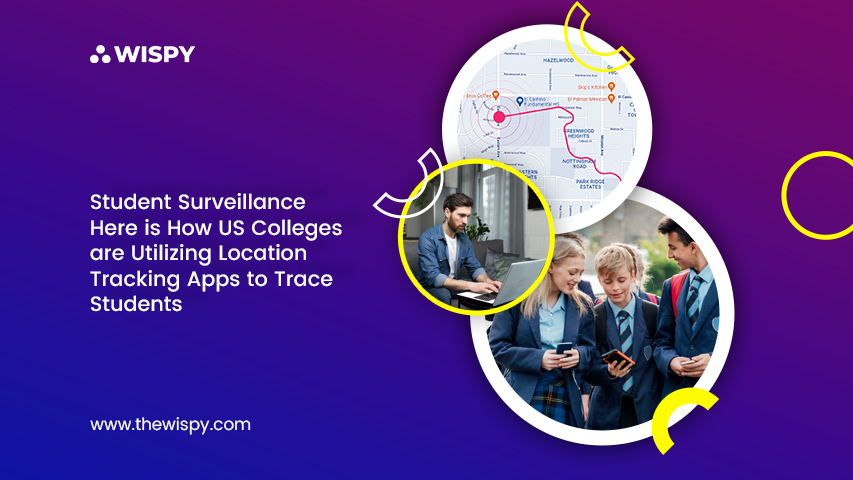
Student surveillance has quietly reached college campuses, and location tracking apps are leading the way. Technology now monitors us everywhere, from security cameras to GPS systems. Not long ago, China’s smart uniforms that locate students using built-in chips seemed extreme. Today, however, some US institutions are testing a similar idea. Instead of uniforms, they ask students to install an attendance app on their phones.
This article explains how these apps work, which ones colleges use, and where the privacy concerns lie. So, let’s dive in.
How Do Location Tracking Apps Work?
Location tracking apps rely on the same tools your phone already uses for maps, ride-hailing, and check-ins. Apps like Google Maps and Instagram use them daily. Furthermore, the technology can report a device’s real-time position, which is why it also helps people find lost phones and laptops. For a deeper look at the basics, see our guide to mobile location tracking.

Several technologies make this possible:
- GPS: The Global Positioning System uses satellites to calculate your position. A phone needs signals from at least four satellites to fix its location accurately.
- Wi-Fi: When you join a network, the network operator can see your device, and the access point’s known location hints at where you are. Consequently, tracking stops once you disconnect.
- Cell towers: Towers estimate a device’s area rather than its exact spot. For example, emergency services use them to find phones when someone calls 911.
- Bluetooth: Short-range beacons detect nearby devices, which makes them ideal for indoor use such as classrooms.
How Colleges Use Location Tracking to Record Attendance
Taking attendance is time-consuming, so institutions look for automated options. Location-based tools give teachers a quick record of who is present and who is absent. As a result, some schools have started testing apps that detect students inside the classroom.
According to reporting by The Kansas City Star, the University of Missouri used phone-based tracking to record attendance. Reports at the time said new students could not choose whether to install the app. Meanwhile, the university maintained that installation was optional, although athletes were reportedly required to install it. Because accounts differ, students should always check their own school’s current policy.
Which App Did the University of Missouri Use?
The university used Spotter Edu, an app it had been running for roughly four years, initially with freshman athletes.
How Does Spotter Edu Work?
Spotter Edu uses Bluetooth, specifically iBeacon signals, to detect whether a phone is inside a classroom. Since Bluetooth only works at short range, tracking is limited to the room itself. Unlike GPS-based tools, it does not follow students once they leave.
The company’s founder said about 40 schools tested the app. In addition, a Syracuse University professor reported better attendance after adopting it. An earlier version had used GPS, but students had to grant location permission.
Are There Alternatives to Spotter Edu?
Yes. Degree Analytics built an app that uses Wi-Fi signals instead of Bluetooth. Likewise, the New York Times reported that FanMaker rewards students with loyalty points for staying at sporting events.
Do Attendance Tracking Apps Invade Privacy?
Supporters argue that these apps are limited to the classroom and require permission. Critics respond that “optional” can feel mandatory when grades or athletic eligibility are involved. Therefore, three questions are worth asking before you install any campus app:
- Is installation truly voluntary, and can you opt out without penalty?
- What data is collected, and how long is it stored?
- Who can see it, and is it shared with third parties?
Our article on protecting your online privacy covers how to review app permissions on your phone.
Other Legitimate Uses of Location Tracking
Beyond campuses, location sharing helps in everyday life when everyone knows about it and agrees:
- Families can share locations openly through tools like Apple Find My, Google Family Link, or Life360.
- Businesses can track company vehicles and cargo, with employees informed through workplace policy.
- Individuals can locate a lost or stolen device.
Above all, consent and transparency separate a safety tool from a privacy violation.
Final Thoughts
Student surveillance through attendance apps is now a real part of campus life. Spotter Edu shows how Bluetooth can confirm presence without following students around, yet questions about consent remain. Consequently, students and parents should read policies carefully and ask schools how data is used.
FAQs
Can cell towers be used to track a phone’s location?
Yes. Carriers can estimate a phone’s general area from tower signals, and police may request this data through legal channels.
What technologies are used for location tracking?
Common ones include GPS, Wi-Fi, cell towers, and Bluetooth.
Which apps track your location?
Many everyday apps do, including Google Maps, Uber, Facebook, and games like Pokémon GO. You can review and limit these permissions in your phone’s settings.
Related Posts
Mobile Tracker Apps: How They Work and Top 5 Benefits
Have you ever wondered how mobile tracker apps find the...
Read More
Is it Possible to Track Cell Phone Location for Free?
Can you track cell phone location for free? Yes, and...
Read More
How to Track IMEI Number: 5 Ways to Find Your Lost Phone
Can you track IMEI number details to find a lost...
Read More
Install TheWiSpy Monitor App Now and Start Exploring Your Kid’s and Employee’s Digital Space
- Protect Your Kids
- Secure Your Business
- Backup Personal Data
 Affiliate Login

 Spanish